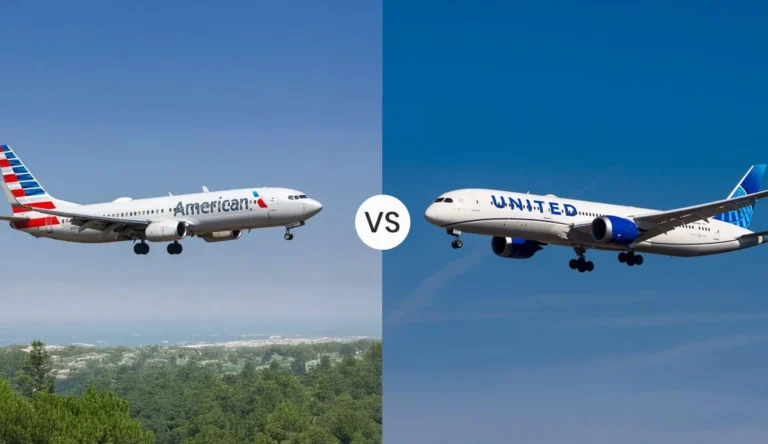

Choosing the right airline can make or break your travel experience. If you have ever asked yourself, “Is American Airlines better than United?”, you are not alone. Millions of travelers compare these two legacy carriers every year before booking a flight. Both airlines operate massive domestic and international networks, but they differ in comfort, pricing, loyalty programs, and overall passenger satisfaction.
In this in-depth comparison, we break down every major factor so you can decide which airline deserves your next booking.
Overview of American Airlines vs United Airlines
American Airlines (AA) and United Airlines (UA) are two of the largest airlines in the world. Both are founding members of competing global alliances American belongs to the oneworld alliance, while United is a key member of the Star Alliance. Together, they serve hundreds of destinations across six continents.
American Airlines is headquartered in Fort Worth, Texas, and operates its main hubs at Dallas/Fort Worth (DFW), Charlotte (CLT), Miami (MIA), and Philadelphia (PHL). United Airlines, based in Chicago, Illinois, runs major hubs at Newark (EWR), Houston (IAH), Denver (DEN), San Francisco (SFO), and Chicago O Hare (ORD).
Seat Comfort and Cabin Experience
Seat comfort is one of the first things passengers notice, and it is a critical factor when comparing American Airlines vs United Airlines.
Economy Class
In economy class, both airlines offer a similar seat pitch of around 30 to 31 inches on most domestic flights. However, United has been gradually retrofitting its narrowbody fleet with slimmer seats that provide slightly more knee room despite the same pitch measurement. American Airlines economy seats tend to feel a bit narrower on certain aircraft, particularly the Boeing 737 MAX.
Business and First Class
On long-haul international routes, United Polaris business class is widely considered one of the best business-class products among US carriers. The Polaris seat converts into a fully flat bed with direct aisle access in a 1-2-1 configuration. American Airlines offers Flagship Business, which also features lie-flat seats, but the consistency varies across their fleet. Some older American Airlines widebodies still fly with outdated 2-2-2 configurations that lack direct aisle access.
For domestic first class, both airlines offer recliner-style seats with extra legroom. The experience is comparable, though American Airlines tends to offer a slightly wider seat on certain routes.
In-Flight Entertainment and Wi-Fi
Entertainment options can make a significant difference on longer flights.
United Airlines provides seatback screens on most of its widebody aircraft and newer narrowbody planes. Their streaming library is available on personal devices as well. United has invested heavily in high-speed Starlink Wi-Fi, which is rolling out across the fleet and offers free internet to MileagePlus members on equipped aircraft.
American Airlines famously removed seatback screens from many of its narrowbody aircraft, relying instead on a streaming app for personal devices. While this saves the airline money on maintenance, many passengers find it inconvenient, especially when their phone or tablet battery runs low. American offers paid Wi-Fi through Viasat and Gogo, though speeds can be inconsistent.
Winner: United Airlines takes the lead here with seatback screens and free Starlink Wi-Fi.
Route Network and Hub Locations
Your choice between these two airlines may depend on where you live and where you want to fly.
American Airlines dominates the southern and eastern United States, with strong hubs in Dallas, Miami, Charlotte, and Philadelphia. If you travel frequently to Latin America and the Caribbean, American has a clear advantage with its extensive Miami hub.
United Airlines has a stronger presence in the western United States and Asia-Pacific region. Its hubs in San Francisco, Denver, and Houston offer excellent connectivity to destinations across the Pacific and to Europe. United also has a robust presence at Newark, making it a top choice for travelers in the New York metro area.
Winner: This depends on your home base and destinations. American wins for Latin America; United wins for Asia-Pacific.
Frequent Flyer Programs: AAdvantage vs MileagePlus
Loyalty programs are a deciding factor for frequent travelers. Both airlines use revenue-based earning systems, meaning you earn miles based on how much you spend rather than how far you fly.
American Airlines AAdvantage
AAdvantage offers elite status tiers: Gold, Platinum, Platinum Pro, and Executive Platinum. Perks include free checked bags, priority boarding, complimentary upgrades, and bonus miles. AAdvantage miles can be redeemed on oneworld partners like British Airways, Cathay Pacific, and Qantas.
United Airlines MileagePlus
MileagePlus features Silver, Gold, Platinum, and 1K status levels. United is known for offering PlusPoints at higher tiers, which can be used to confirm upgrades to Polaris business class on international flights a highly valuable perk. MileagePlus miles can be used across Star Alliance partners like Lufthansa, ANA, and Singapore Airlines.
Winner: United MileagePlus has a slight edge thanks to PlusPoints and strong Star Alliance redemption options.
Pricing and Value for Money
Ticket prices between the two airlines are often very similar on competitive routes. However, there are some differences in what you get for your fare.
Both airlines offer Basic Economy fares that restrict seat selection, carry-on bags (on some routes), and upgrades. American Airlines Basic Economy does not allow carry-on bags on domestic flights, while United has gone back and forth on this policy.
For regular economy and above, pricing is generally comparable. The real value difference comes from credit card partnerships. The Citi AAdvantage card and the Chase United Explorer card both offer competitive sign-up bonuses, free checked bags, and priority boarding. Choose the card that aligns with the airline you fly most.
Customer Service and Reliability
Customer service reputation has fluctuated for both airlines over the years.
According to recent DOT data and J.D. Power surveys, United Airlines has improved significantly in on-time performance and customer satisfaction scores since 2023. Their app experience is also rated higher, with features like real-time rebooking during delays and connection saver notifications.
American Airlines has faced criticism for inconsistent service and operational issues at some hubs. However, their customer service agents are generally responsive, and the airline has invested in improving their digital tools.
Winner: United Airlines edges ahead with better technology and improved reliability scores.
Baggage Policies
Both airlines charge for checked bags in economy class unless you hold elite status or their co-branded credit card.
- First checked bag: $35 on both airlines for domestic flights
- Second checked bag: $45 on both airlines
- Carry-on bag: Included in most fares (restricted in Basic Economy on American)
The policies are nearly identical, so there is no clear winner here.
Airport Lounges
United operates the United Club lounges, which are available at most hubs. For premium long-haul travelers, the Polaris Lounge offers an elevated experience with restaurant-style dining, shower suites, and quiet rest areas.
American Airlines operates Admirals Club lounges, which are functional but often feel outdated compared to United Club locations. American also has the Flagship Lounge for premium cabin international travelers, which offers a comparable experience to Polaris.
Winner: United Polaris Lounges are a standout, but the Admirals Club and United Club are fairly comparable.
Final Verdict: Is American Airlines Better Than United?
The answer depends on your priorities and travel patterns:
- Choose American Airlines if you are based near their hubs (DFW, MIA, CLT, PHL), fly frequently to Latin America or the Caribbean, or prefer the oneworld alliance partners.
- Choose United Airlines if you value a better business-class product (Polaris), free high-speed Wi-Fi, superior technology, Asia-Pacific connectivity, or Star Alliance redemptions.
Overall, United Airlines has a slight edge in 2026 thanks to its Polaris product, Starlink Wi-Fi rollout, improved customer satisfaction, and the valuable MileagePlus PlusPoints system. However, American Airlines remains a strong competitor, particularly for travelers in the southern and eastern US.
The best airline for you is the one that serves your home airport, flies to your most frequent destinations, and rewards your loyalty the most. Compare fares on both airlines before every trip, and consider holding elite status and a co-branded credit card with whichever carrier you fly the most.