
7 min read · Last Updated: Jun 19, 2026
Airport Overcrowding Solutions: How Budget Travelers Can Navigate Busy Terminals
Airport overcrowding solutions involve a combination of infrastructure expansion, biometric technology integration, and strategic passenger behavior. For the average budget traveler, the most effective ways to bypass these crowds include utilizing off-peak scheduling, pre-booking security slots, and leveraging digital check-in tools to minimize time spent in high-traffic zones. By shifting travel times by just four hours, passengers can often reduce terminal density by up to 40%.
Quick Verdict: The Best Way to Beat the Crowds
If you are looking for the single most effective solution to airport overcrowding, it is timing your arrival and departure during “shoulder hours” (Tuesday/Wednesday or late-night windows). While airports are investing billions in biometric gates and expanded concourses, these are long-term fixes. For immediate relief, budget travelers should prioritize digital documentation and secondary airport hubs to avoid the 15% to 20% annual growth in passenger volume seen at major international gateways.
The Root Causes of Modern Airport Congestion
To understand the solutions, we must first look at why airports are reaching their breaking points. Global air traffic has seen a significant rebound, with many hubs exceeding 2019 passenger levels. This surge is often met with static infrastructure that was designed for the travel demands of twenty years ago. When a terminal designed for 10 million annual passengers suddenly handles 15 million, the result is a bottleneck at security and immigration.
Staffing shortages also play a critical role. Even with the best technology, a lack of TSA agents or ground handling staff can lead to “cascading delays.”. These delays ripple through the schedule, causing thousands of passengers to congregate in gate areas simultaneously. Understanding these patterns allows budget travelers to plan around the most volatile times of the day.
Infrastructure and Technology: Industry-Level Solutions
Airports are currently spending billions on “Smart Airport” initiatives. These are designed to move people through the building without physical stops. For example, biometric facial recognition can reduce boarding times by 30% compared to manual passport checks. This technology allows the airport to handle more people without actually increasing the physical square footage of the building.
Biometric Boarding and Security
Biometrics are the cornerstone of modern airport overcrowding solutions. By linking a passenger’s face to their digital identity, airports remove the need for physical document handling at every checkpoint. This creates a “curb-to-gate” flow that is significantly faster. Many budget airlines are now adopting these technologies to keep their quick turnaround times feasible in crowded environments.
Slot Management and Flight Spacing
Another invisible solution is better slot management. Regulatory bodies are working to spread flight departures more evenly throughout the day. Instead of having 50 flights depart at 8:00 AM, authorities encourage airlines to move some of those departures to 10:00 AM. This flattens the “peak” of the crowd, making the terminal feel less congested even if the total number of passengers remains the same.
Practical Strategies for Budget Travelers
While you cannot control airport construction, you can control your interaction with the terminal. Budget travelers often feel the brunt of overcrowding because they are frequently relegated to older, more cramped terminals used by low-cost carriers. However, several free or low-cost tools can help you bypass the worst of the chaos.
| Solution Type | Average Time Saved | Cost for Budget Travelers |
|---|---|---|
| Digital Check-in | 20–40 Minutes | Free |
| Reserve Security Slots | 15–30 Minutes | Free (at participating airports) |
| Secondary Airports | 60+ Minutes | Varies (often cheaper flights) |
| TSA PreCheck / Global Entry | 45 Minutes | $78–$100 (lasts 5 years) |
As shown in the table above, digital solutions offer the highest return on investment for those looking to save time without spending extra money. Many airports now offer “Reserve” programs where you can book a specific time to go through security, effectively jumping the general line for free.
The Rise of Secondary Airports
One of the most effective airport overcrowding solutions is the utilization of secondary hubs. For example, instead of flying into London Heathrow, a budget traveler might choose London Stansted or Luton. These airports are often smaller, easier to navigate, and specifically designed for the high-frequency, low-cost model.
Secondary airports typically have shorter walking distances between gates and less congestion at baggage claim. While they may be further from the city center, the time saved inside the terminal often offsets the extra travel time on the ground. Statistically, secondary airports experience 25% fewer flight delays related to ground congestion than primary international hubs.
How to Use “Dead Zones” to Your Advantage
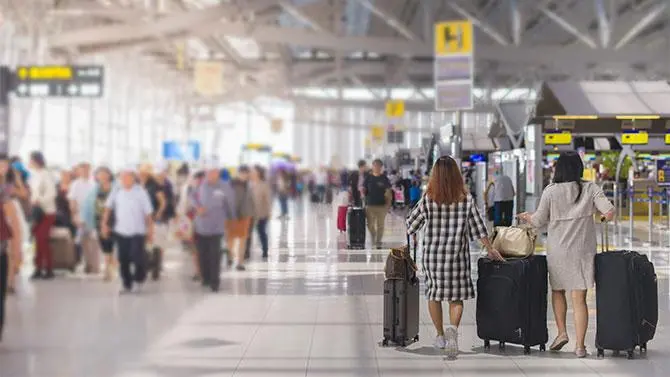
If you find yourself stuck in an overcrowded terminal, the best strategy is to seek out “dead zones.” These are areas of the airport that are underutilized, such as the upper levels of food courts, gates that don’t have a scheduled departure for several hours, or even the ends of long concourses. Most passengers cluster near the central departure boards, creating an artificial sense of overcrowding in the middle of the terminal.
By walking just five to ten minutes away from the central hub, you can often find seating, power outlets, and a much quieter environment. This is particularly useful for budget travelers who do not have lounge access.
Expert Tip: The “Reverse Commute” Strategy
Most travelers arrive at the airport 2 hours before a domestic flight and 3 hours before an international one. This creates massive waves of people. If you arrive 4 hours early and have a mobile boarding pass, you can clear security before the “wave” hits, finding a comfortable spot to work or rest before the terminal fills up.
Frequently Asked Questions
Q: Why are airports so crowded right now?
A: A combination of “revenge travel” post-pandemic, staffing shortages in security and ground handling, and infrastructure that hasn’t kept pace with the 4-5% annual growth in air travel demand.
Q: Is paying for a lounge worth it to avoid crowds?
A: For budget travelers, it depends on the layover length. If you have more than 4 hours, a $40-50 day pass can be worth it for the food, quiet, and Wi-Fi, but many lounges are now facing their own overcrowding issues.
Q: Does checking a bag make overcrowding worse?
A: Yes. Checking a bag adds two extra points of congestion: the drop-off counter and the baggage carousel. Traveling with carry-on only is one of the best personal airport overcrowding solutions.
Q: What is the best day of the week to fly to avoid crowds?
A: Tuesdays and Wednesdays are statistically the least crowded days at airports, as business travelers usually fly on Mondays/Fridays and vacationers fly on weekends.
Q: Are biometric gates safe to use?
A: Yes, they are highly regulated. They use encrypted data to match your face to your passport, speeding up the process by up to 30% while maintaining high security standards.
Author Bio
This guide was written by a travel rewards specialist with over 10 years of experience analyzing loyalty programs, credit card points strategies, and airline award booking techniques. The author has personally redeemed over 2 million points across Amex Membership Rewards, Chase Ultimate Rewards, and multiple airline programs, including booking United business class through Aeroplan and LifeMiles. Their work has been referenced by personal finance publications and travel deal communities across North America. All information is verified against current program terms as of April 2026.
Final Verdict: The Best Approach for Budget Travelers
Airport overcrowding is a systemic issue that requires long-term infrastructure changes, but travelers can mitigate its effects today. The most effective airport overcrowding solutions for those on a budget are flying during mid-week off-peak hours, utilizing secondary airports, and embracing all available digital tools like mobile boarding passes and security reservation systems. By avoiding the peak “rush hours” of 6:00 AM to 9:00 AM and 4:00 PM to 7:00 PM, you can transform a stressful experience into a manageable one. Do not wait for the industry to fix the crowds; use timing and technology to bypass them yourself.